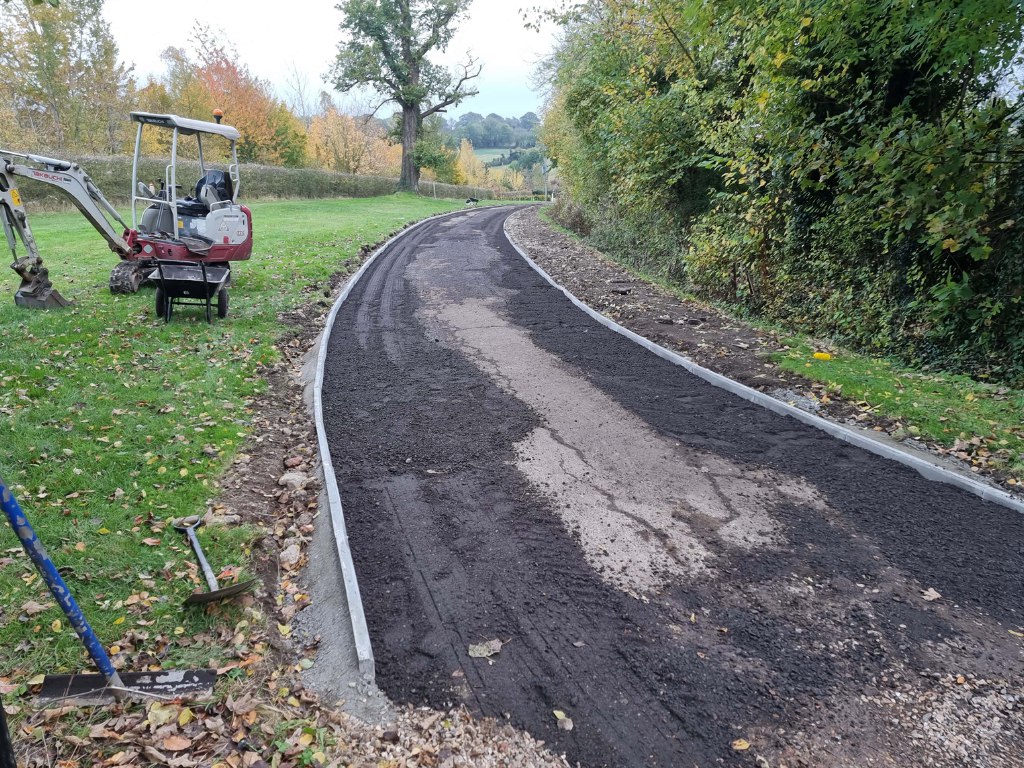
Is a Tar & Chip Driveway a Good Choice for Residential Properties?
Choosing a driveway surface involves more than deciding which material looks most attractive. A residential driveway needs to provide dependable vehicle access, cope with regular use and work appropriately with the layout and character of the property. The condition of the underlying ground and the quality of preparation are equally important.
Tar and chip surfacing, sometimes described as surface dressing, combines a bituminous binder with a layer of stone aggregate. The aggregate becomes embedded into the binder to create a textured, hard-wearing surface with a more natural appearance than some smoother driveway finishes.
For homeowners in Billingshurst, West Sussex, a tar and chip driveway can be a practical option where the site, preparation and intended use are suitable. Understanding how the surface works, what lies beneath it and how it differs from other driveway finishes can help determine whether it is the right choice for a particular property.
What Should You Know Before Choosing a Tar & Chip Driveway?
A tar and chip driveway is created by applying a bituminous binder to a suitably prepared surface before distributing aggregate across it. The stone is then incorporated into the binder to create the finished wearing surface.
Although the visible aggregate is an important part of its appearance, the long-term performance of the driveway also depends heavily on the supporting construction beneath it. A stable base, appropriate levels, suitable drainage and properly prepared edges all contribute to the completed driveway.
For this reason, choosing tar and chip should involve assessing the complete driveway rather than focusing solely on the surface material.
Tar & Chip Provides a Distinctive Textured Finish
One of the defining characteristics of tar and chip is its textured appearance.
Because natural aggregate forms the exposed surface, the driveway can have a less uniform character than some other surfacing options. This can work particularly well for homeowners who prefer a practical driveway without an overly polished appearance.
The choice of aggregate can also influence the overall visual effect.
It Can Suit Traditional and Contemporary Properties
Tar and chip is not limited to one particular style of home.
Its aggregate finish can complement established surroundings, while a carefully selected stone can also work with more contemporary property designs. The key is considering the driveway as part of the complete exterior rather than selecting the aggregate independently.
Edges, surrounding landscaping and the shape of the driveway all contribute to the finished appearance.
The Surface Works Well Across Larger Driveway Areas
Some residential properties have substantial driveway areas that need to accommodate parking, turning and access.
Tar and chip can create a visually consistent surface across these spaces without introducing numerous individual paving units or complicated patterns.
For larger areas, good preparation becomes particularly important because variations in the supporting surface can influence the finished result.
Smaller Residential Driveways Can Also Benefit
A tar and chip driveway does not need to cover an extensive area to be effective.
On a smaller driveway, the textured aggregate can create a clearly defined entrance and parking surface without making the design unnecessarily complicated.
The layout should still be planned around practical vehicle movements and pedestrian access.
The Existing Driveway Needs to Be Assessed First
If tar and chip is being considered as an improvement to an existing driveway, the current surface should be inspected before deciding how the work will proceed.
A stable existing construction presents a different situation from a driveway containing widespread cracks, substantial settlement or failing areas.
The appropriate preparation depends on what is already present and how well it is performing.
An Unstable Driveway Should Not Simply Be Covered
A new surface cannot compensate for significant movement underneath it.
If the existing driveway has sunk because the supporting layers are unstable, applying tar and chip over the top does not remove the cause of that movement.
Where underlying deterioration is present, it should be assessed and addressed appropriately before the final surface is installed.
The Base Is Fundamental to the Finished Driveway
Homeowners naturally see and judge the upper surface, but much of a driveway’s performance is determined underneath.
The supporting base needs to provide appropriate stability for vehicles entering, leaving and parking on the area. Weak or inadequately prepared foundations can eventually affect the surface above.
Good driveway construction therefore starts with preparation rather than the decorative aggregate.
Compaction Is an Important Part of Preparation
A driveway needs to support repeated vehicle loading.
Where new supporting materials are required, appropriate preparation and compaction help create a stable foundation for the layers above. Poorly consolidated areas can settle differently over time.
Professional installation pays careful attention to these less visible stages because they influence the performance of the completed driveway.
Existing Cracks Can Provide Useful Information
Cracks in an older driveway should not automatically be dismissed as cosmetic.
Their pattern and extent can provide clues about what is happening underneath. An isolated surface defect is different from extensive cracking accompanied by settlement or movement.
Understanding the cause helps determine the preparation needed before tar and chip surfacing is considered.
Potholes Should Be Properly Addressed
Potholes usually indicate that part of the existing driveway has deteriorated.
Simply filling the depression at surface level without considering the condition beneath it may leave the underlying weakness unresolved. Any failed material needs appropriate assessment and preparation.
A consistent finished driveway relies on consistent support.
Drainage Should Be Considered Before Surfacing
Water management is an important part of driveway design.
The shape and levels of the driveway influence where rainwater travels and whether it tends to collect in particular areas. Existing drainage problems should therefore be identified before a new surface is installed.
Surfacing should form part of the wider drainage plan rather than being considered independently.
Standing Water Can Indicate a Level Problem
Repeated puddling may suggest that part of the driveway contains a low point or unsuitable fall.
Installing a new surface without addressing the reason water collects may not provide the desired improvement.
Assessing levels beforehand allows appropriate preparation to be incorporated into the project.
Driveway Falls Need Careful Planning
Many driveways have a gradual gradient that influences the movement of water.
The finished surface should work with the intended levels of the site while also providing practical vehicle access. Changes in gradient need particular attention where the driveway meets other surfaces.
These details are easier to address during preparation than after the surface has been completed.
Edges Are an Important Part of the Installation
The boundaries of a driveway affect both function and appearance.
Suitable edging can define the tar and chip area and create a clear transition to lawns, planting areas, paths or other surfaces. The appropriate detail depends on the individual layout.
Planning the edges early can help produce a more deliberate and complete finish.
The Entrance Deserves Particular Attention
The driveway entrance often experiences concentrated vehicle movement.
Vehicles repeatedly pass over the same area and may turn as they enter or leave. The condition and preparation of this section therefore deserve careful consideration.
A well-planned entrance should work as part of the complete driveway rather than being treated as a separate afterthought.
Turning Areas Experience Different Forces
Driveways that provide space for manoeuvring need to accommodate more than straightforward vehicle movement.
Turning wheels place different demands on the surface compared with vehicles simply travelling in a straight line. The driveway construction should therefore be appropriate for the intended pattern of use.
Understanding how vehicles will move across the area is useful during planning.
Parking Areas Also Need Suitable Support
Cars are often parked in the same locations repeatedly.
This creates concentrated loading in particular sections of the driveway. Suitable preparation beneath these areas is therefore just as important as preparation along the main access route.
The complete driveway should be designed around how it will actually be used.
Tar & Chip Has a More Textured Character Than Tarmac
Tar and chip and tarmac can both be used for driveway surfacing, but their finished appearances are noticeably different.
Tarmac generally produces a more uniform surface, while tar and chip leaves exposed aggregate as part of the finished texture.
Which appearance is preferable depends on the property, surroundings and homeowner’s priorities.
Tar & Chip Is Different From Loose Gravel
Although the exposed stone gives tar and chip some of the visual character associated with aggregate driveways, the construction is different from simply spreading loose gravel.
The aggregate is incorporated into the bituminous binder rather than remaining entirely loose across the surface.
This distinction is important when comparing different driveway options.
Some Loose Aggregate Can Initially Be Present
Because stone aggregate forms part of the surface dressing process, a newly installed tar and chip driveway can initially contain some loose stone.
This should be understood as part of the characteristics of the surfacing rather than expecting it to behave exactly like a completely smooth, sealed material.
A professional installer can explain what to expect from the finished surface.
Aggregate Selection Influences Appearance
The stone used in a tar and chip driveway plays an important visual role.
Different aggregates can vary in size, tone and overall character. The choice should take account of the property and surrounding landscaping rather than simply being viewed as an isolated sample.
A well-selected aggregate can help the driveway sit comfortably within its surroundings.
A Simple Finish Can Be an Advantage
Not every driveway benefits from elaborate patterns or multiple materials.
Tar and chip can create a relatively straightforward, consistent finish in which the aggregate itself provides visual interest. This can be particularly effective where the surrounding property and garden already contain strong design features.
A simple driveway surface can allow those features to remain prominent.
Borders Can Provide Additional Definition
Where a more structured appearance is wanted, appropriate borders can help define the driveway.
They can highlight the perimeter, distinguish planting areas or create a deliberate transition to pedestrian paths.
The best border design is usually one that serves a clear practical or visual purpose rather than adding unnecessary complexity.
The Driveway Should Work With Pedestrian Access
Residential driveways are not used exclusively by vehicles.
People regularly walk between parked cars, entrances and other parts of the property. The layout should therefore consider how pedestrian movement will work alongside parking and vehicle access.
Planning the complete area can make everyday use more convenient.
Consider How the Driveway Connects to Other Surfaces
A driveway may meet paths, paved areas or other sections of hard landscaping.
These transitions need appropriate levels and clear boundaries. Poorly planned junctions can look unfinished or create awkward changes between surfaces.
Thinking about adjoining areas before installation can produce a more coherent overall result.
Maintenance Expectations Should Be Realistic
Every driveway surface requires some degree of attention over time.
Leaves, soil and organic material can accumulate, particularly around edges or quieter areas. Keeping the surface reasonably clear helps maintain its appearance.
No external driveway should be selected on the assumption that it will never require maintenance.
Weed Growth Is Not Solely Determined by the Surface
Unwanted growth can develop where organic material and seeds accumulate on or around outdoor surfaces.
Keeping edges clear and removing built-up debris can therefore form part of routine driveway care.
Good maintenance involves looking after the complete area rather than focusing only on the central driving surface.
Appearance Can Change Naturally With Use
A newly installed driveway will naturally begin to settle visually into its surroundings as it is used and exposed to weather.
This does not mean the surface is necessarily deteriorating. Outdoor materials naturally change in appearance to some degree over time.
Regular basic maintenance can help keep the driveway presentable.
Preparation Requirements Vary Between Properties
Two similar-looking properties may require very different driveway preparation.
One site may already contain suitable supporting construction, while another may have areas of deterioration requiring more substantial groundwork. Existing levels and drainage can also vary.
This is why assessment should take place before determining the installation approach.
Tar & Chip Should Be Considered as a Complete Surfacing System
The visible aggregate is only the final part of the driveway.
Base stability, preparation, levels, drainage, binder application, aggregate distribution and compaction all contribute to the completed result.
Looking at the driveway as a complete system gives a more realistic understanding of what professional installation involves.
Correct Binder Application Matters
The bituminous layer needs to provide the appropriate foundation for the aggregate.
Consistent application helps the stone become incorporated across the intended surface. This stage requires controlled installation rather than simply applying material without consideration of the existing area.
The quality of the finished surface depends on attention throughout the process.
Aggregate Distribution Needs to Be Consistent
Once the binder has been applied, the aggregate needs to be distributed appropriately.
Uneven application can affect both appearance and the consistency of the surface. Professional installation therefore requires careful control during each stage.
The objective is a coherent finish rather than simply covering the driveway with stone.
Weather Conditions Can Influence Installation
Outdoor surfacing work needs to take account of the conditions at the time of installation.
Preparation and material application should be carried out when conditions are suitable for the system being used. Rushing the process regardless of weather can affect workmanship.
Professional planning considers these practical requirements before surfacing begins.
Tar & Chip Can Be Suitable for Driveway Improvements
An existing driveway that has become visually tired does not always require the same treatment.
Where the underlying construction remains appropriate, tar and chip may form part of a resurfacing approach. Where the base has substantially deteriorated, additional preparation may be required first.
The correct solution depends on condition rather than appearance alone.
Surface Dressing Cannot Correct Major Structural Problems
This is an important limitation to understand.
If a driveway contains substantial foundation failure, significant settlement or other underlying problems, the final surfacing material cannot resolve them by itself.
The condition beneath the surface should therefore guide the scope of preparation.
A Professional Assessment Helps Avoid Unnecessary Work
Proper driveway assessment is not simply about identifying everything that could be replaced.
It should also determine what remains serviceable. Where existing supporting construction is suitable, it may be possible to retain appropriate elements rather than carrying out unnecessary work.
A condition-led approach helps ensure the installation responds to the actual driveway.
Consider Long-Term Use Rather Than Appearance Alone
The initial appearance of a driveway is important, but the area will also need to function every day.
Homeowners should consider vehicle numbers, parking arrangements, turning movements, pedestrian access, drainage and maintenance expectations alongside the preferred finish.
A driveway that works effectively for the household is more valuable than one selected purely from an aggregate sample.
Is Tar & Chip Suitable for Every Residential Driveway?
No single driveway surface is automatically suitable for every property.
Tar and chip can be an effective residential option, but its suitability depends on the site, existing construction, required preparation, layout and expectations for the finished surface.
An assessment can help determine whether it is appropriate for the individual property.
Why Professional Tar & Chip Installation Adds Value
The finished aggregate is only one part of a successful tar and chip driveway. Preparation, base stability, drainage, levels, edges and correct material application all contribute to the completed surface.
At NS Driveways Billingshurst, we assess the existing driveway and how the area will be used before recommending an appropriate surfacing approach. Where tar and chip is suitable, attention can be given to the supporting construction and preparation as well as the visible finish.
For homeowners in Billingshurst, West Sussex, this approach helps ensure that the driveway is planned around the individual property rather than relying on a standard solution.
Choosing the Right Driveway Starts With the Site
Tar and chip can provide an attractive, textured and practical residential driveway, but the decision should begin with the condition of the area where it will be installed.
A stable foundation, suitable levels and appropriate drainage provide a much better starting point than attempting to use a new surface to conceal existing defects.
Assessing these factors first allows the surfacing choice to be made for practical reasons as well as appearance.
Conclusion
A tar and chip driveway can be a good choice for residential properties where a textured aggregate appearance and practical vehicle surface suit the property. It can work across both compact and larger driveway layouts while providing a distinctive alternative to more uniform surfacing materials.
However, the quality of the completed driveway depends heavily on preparation. Existing surface condition, base stability, drainage, levels, edges, parking arrangements and vehicle movements should all be considered before installation. Tar and chip should not simply be used to cover unresolved problems beneath an existing driveway.
If you are considering a tar and chip driveway for your property in Billingshurst, West Sussex, contact NS Driveways Billingshurst. We can assess the existing area and recommend an appropriate preparation and surfacing approach based on the condition and intended use of your driveway.
Call us on: 01403 907 098
Click here to find out more about NS Driveways Billingshurst
Click here to complete our contact form and see how we can help with your driveway needs.